
As A Complete Guide to Lightspeed Retail Inventory Management for New Businesses takes center stage, this opening passage beckons readers with valuable insights into the world of effective inventory management using Lightspeed Retail. Learn how this powerful tool can transform your new business operations and drive efficiency like never before.
Introduction to Lightspeed Retail Inventory Management
Effective inventory management is crucial for new businesses to ensure smooth operations, minimize costs, and maximize profits. With accurate tracking of stock levels, businesses can avoid stockouts, overstocking, and potential loss of sales. Lightspeed Retail offers a comprehensive solution for inventory management, providing new businesses with the tools they need to succeed in managing their inventory efficiently.Key Features and Benefits of Using Lightspeed Retail
- Real-time Inventory Tracking: Lightspeed Retail allows businesses to track their inventory in real-time, providing up-to-date information on stock levels and sales.
- Automated Reordering: The system can generate purchase orders automatically based on preset reorder points, ensuring that businesses never run out of essential items.
- Multi-location Management: Lightspeed Retail supports businesses with multiple locations, allowing for centralized inventory management across all stores.
- Inventory Analytics: The platform offers detailed analytics and reports on inventory performance, helping businesses make data-driven decisions to optimize their stock levels.
Streamlining Inventory Processes with Lightspeed Retail
Lightspeed Retail streamlines inventory processes by automating manual tasks, reducing human error, and improving overall efficiency. By integrating with other business functions such as point of sale and accounting, Lightspeed Retail offers a seamless solution for new businesses to manage their inventory effectively.Setting Up Lightspeed Retail Inventory System
Setting up the Lightspeed Retail inventory system is crucial for new businesses to efficiently manage their products, categories, and suppliers. This step-by-step guide will walk you through the initial configuration process and how to customize settings according to your specific business needs.Adding Products, Categories, and Suppliers
To set up your inventory system effectively, follow these steps:- Add Products:
- Go to the Products tab in your Lightspeed Retail account.
- Click on the "Add Product" button.
- Enter the product details such as name, description, price, and quantity.
- Assign the product to the appropriate category for easier organization.
- Save the product information once completed.
- Add Categories:
- Navigate to the Categories section within your dashboard.
- Click on "Add Category" to create a new category.
- Name the category and assign any relevant subcategories if needed.
- Save the category to organize your products efficiently.
- Add Suppliers:
- Access the Suppliers tab in Lightspeed Retail.
- Click on "Add Supplier" to input supplier details.
- Include information like supplier name, contact details, and payment terms.
- Save the supplier information for future reference.
Customizing Settings for Business Needs
To tailor the Lightspeed Retail inventory system to your specific requirements, consider the following customization options:- Adjust Inventory Alerts:
- Set up alerts for low stock levels to reorder products in time.
- Specify threshold quantities for different products to trigger alerts.
- Configure Tax Settings:
- Enter tax rates applicable to your business for accurate calculations.
- Adjust tax settings based on your location and tax regulations.
- Personalize Reporting:
- Customize reports to track sales, inventory turnover, and product performance.
- Select specific metrics and time periods for detailed insights.
Managing Inventory Levels with Lightspeed Retail
Maintaining accurate inventory levels is crucial for the success of any retail business. With Lightspeed Retail, you can streamline your inventory management process and ensure that you always have the right amount of stock on hand.Conducting Regular Inventory Counts
- Set a schedule for regular inventory counts to ensure accuracy.
- Use barcode scanners or mobile devices to quickly and efficiently count stock.
- Compare physical counts to system records and investigate any discrepancies.
Reconciling Discrepancies
- Identify the root causes of inventory discrepancies, such as theft, shrinkage, or data entry errors.
- Adjust inventory levels in Lightspeed Retail to reflect accurate stock counts.
- Implement measures to prevent future discrepancies, such as staff training or enhanced security measures.
Tracking Stock Movement and Managing Reorder Points
- Utilize Lightspeed Retail's reporting tools to track stock movement and identify fast-selling or slow-moving items.
- Set up reorder points to automatically generate purchase orders when stock levels reach a specified threshold.
- Optimize your inventory levels to reduce carrying costs and prevent stockouts.
Utilizing Reporting and Analytics Tools
When it comes to efficient inventory management, utilizing reporting and analytics tools is crucial in gaining insights and making informed decisions. Lightspeed Retail offers a range of tools to help you analyze your inventory data effectively.
Generating Reports on Sales Trends
- Access reports on sales trends to identify top-performing products and slow-moving items.
- Monitor sales patterns over time to anticipate demand fluctuations.
- Utilize visual representations of sales data to spot trends and patterns easily.
Analyzing Stock Levels
- Generate reports on stock levels to prevent stockouts or overstock situations.
- Set up automated alerts for low stock levels to reorder products in a timely manner.
- Analyze stock turnover rates to optimize inventory levels and reduce carrying costs.
Evaluating Product Performance
- Assess product performance reports to identify best-selling items and underperforming products.
- Adjust pricing strategies based on product performance data to maximize profitability.
- Use product performance analytics to make informed decisions on promotions and marketing campaigns.
Making Data-Driven Decisions
- Utilize analytics to make data-driven decisions for inventory optimization and business growth.
- Identify opportunities for cross-selling or upselling based on sales and customer data.
- Implement changes in inventory management strategies based on analytical insights to improve efficiency.
Integrating Lightspeed Retail with Other Systems
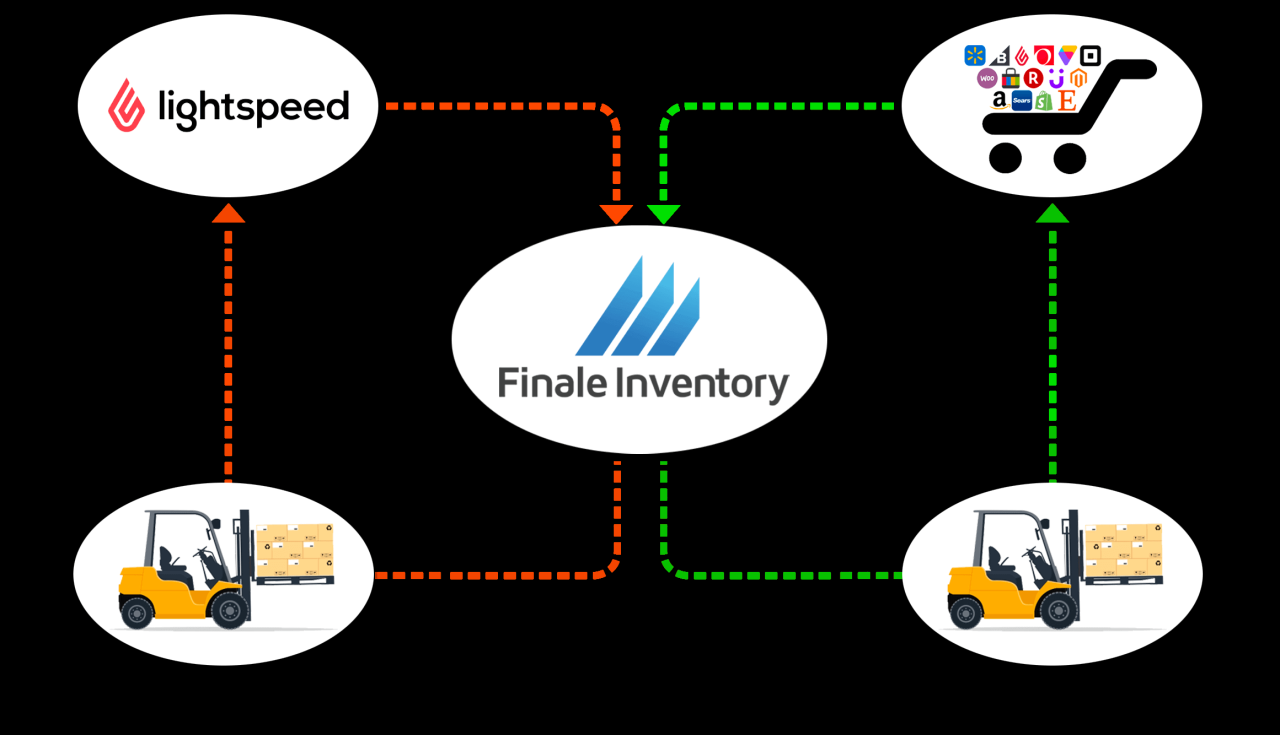 Integrating Lightspeed Retail with other systems such as accounting software or e-commerce platforms can offer several benefits to businesses. By connecting these systems, businesses can streamline operations, improve data accuracy, and enhance overall efficiency.
Benefits of Integration
- Improved Data Accuracy: Integrating Lightspeed Retail with accounting software ensures that inventory and sales data are automatically synchronized, reducing the risk of manual errors.
- Streamlined Operations: Seamless integration allows for real-time updates across systems, enabling better inventory management and order fulfillment processes.
- Enhanced Reporting: By integrating Lightspeed Retail with reporting tools, businesses can generate comprehensive reports that provide valuable insights into sales trends, inventory levels, and customer behavior.
Process of Integration
- Choose Compatible Applications: Select third-party applications that are compatible with Lightspeed Retail and offer the functionality you need.
- Configure Integration Settings: Follow the instructions provided by the applications to set up the integration and establish a connection between systems.
- Test Integration: Conduct thorough testing to ensure that data is accurately shared between Lightspeed Retail and other systems without any glitches.
Examples of Seamless Integration
- Integration with QuickBooks: By integrating Lightspeed Retail with QuickBooks, businesses can automatically sync sales and inventory data, streamlining accounting processes.
- Integration with Shopify: Connecting Lightspeed Retail with Shopify enables businesses to manage online sales and in-store inventory seamlessly, providing a unified shopping experience for customers.
- Integration with Google Analytics: Integrating Lightspeed Retail with Google Analytics allows businesses to track online and offline sales data in one place, gaining valuable insights into customer behavior and marketing effectiveness.
Training and Support for Lightspeed Retail Users
Training employees to effectively use Lightspeed Retail for inventory management is crucial for the success of any business. By providing the necessary guidance and support, new businesses can ensure a smooth adoption and utilization of the system within their organization.Training Employees Effectively
- Organize training sessions: Schedule regular training sessions to teach employees how to use Lightspeed Retail for inventory management effectively.
- Hands-on practice: Encourage hands-on practice to familiarize employees with the system and build their confidence in using it.
- Provide resources: Offer tutorials, guides, and manuals to help employees navigate the system and troubleshoot common issues.
Available Support Resources
- Tutorials and guides: Lightspeed Retail provides comprehensive tutorials and guides to assist users in learning how to use the system efficiently.
- Customer service: New businesses can reach out to Lightspeed Retail's customer service for immediate assistance with any queries or technical issues.
- Online community: Joining the Lightspeed Retail online community can also be beneficial, as users can share experiences and learn from one another.
Best Practices for Adoption and Utilization
- Assign a point of contact: Designate a staff member as the main point of contact for all Lightspeed Retail-related inquiries and support.
- Regularly review performance: Monitor the usage and performance of Lightspeed Retail to identify any areas for improvement or additional training.
- Encourage feedback: Encourage employees to provide feedback on their experience with Lightspeed Retail, allowing for continuous improvement and optimization.
Closure
In conclusion, A Complete Guide to Lightspeed Retail Inventory Management for New Businesses encapsulates the key strategies and benefits of using Lightspeed Retail to streamline inventory processes, enhance accuracy, and fuel business growth. Embrace the power of Lightspeed Retail and unlock your business's full potential today.
Questions Often Asked
How can Lightspeed Retail benefit new businesses?
Lightspeed Retail offers new businesses the advantage of streamlining inventory processes, improving efficiency, and providing valuable insights for growth.
What are the key features of Lightspeed Retail for inventory management?
Key features include accurate inventory tracking, customizable settings, reporting tools, and seamless integration with other systems.
How can Lightspeed Retail help in managing inventory levels effectively?
Lightspeed Retail assists in maintaining accurate inventory levels through regular counts, tracking stock movement, and managing reorder points efficiently.
Is training and support available for new businesses using Lightspeed Retail?
Yes, Lightspeed Retail provides resources like tutorials, guides, and customer service to ensure smooth adoption and utilization for new businesses.